Stiniva Beach: Croatia's Best-Kept Secret on Vis Island
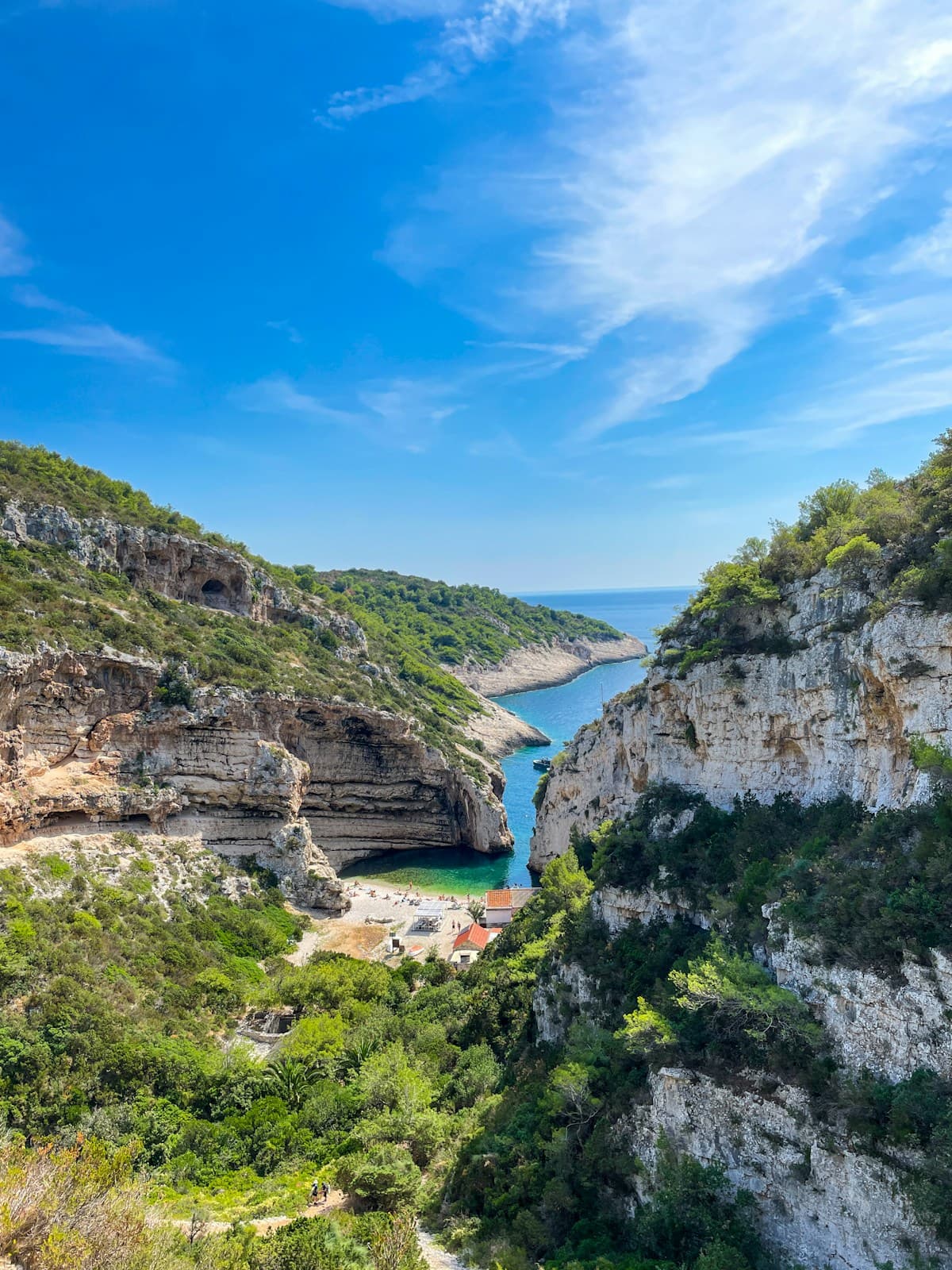
The first time you see Stiniva Beach, you won't believe it's real. Two massive cliff walls rise straight out of the Adriatic, leaning toward each other like ancient gatekeepers, leaving only a narrow gap where the sea pushes through. Behind that gap sits a small pebble cove with water so clear it barely looks like water at all. It looks like something a film crew built, except no one could build something this good.
Stiniva won the European Best Destinations award for best beach in 2016, and somehow it still flies under the radar. That's partly because getting here is genuinely difficult, and partly because it sits on Vis, an island that most tourists skip entirely. Their loss.
Why Vis Island Is Still So Untouched
Vis has a strange history that works in your favor. The Yugoslav military used it as a naval base and kept it closed to foreigners until 1989. While Hvar and Brač were building hotels and cocktail bars through the 70s and 80s, Vis stayed frozen in time. Even now, decades after opening up, the island has a quietness to it that the more popular Dalmatian islands lost long ago. The towns of Vis and Komiža feel like places where people actually live rather than places designed for tourists to photograph.
This is important context for Stiniva, because the beach itself has zero facilities. No sunbed rentals, no snack bars, no lifeguards, no trash cans. You bring everything in and carry everything out. If you forget water, you're hiking 30 minutes back up a steep hillside in the Croatian sun to get some.
Getting to Stiniva Beach
Start in Split. The Jadrolinija ferry to Vis Town runs daily in summer and takes about two and a half hours. A catamaran service cuts that to roughly 80 minutes but runs less frequently. Book ahead in July and August because these ferries fill up, especially if you're bringing a car.
From Vis Town, you need to get to the small village of Žužec on the southern coast. It's about a 25-minute drive. If you've rented a car on the island, park near the trailhead where you'll see other cars pulled off the road. A taxi from Vis Town will cost you around 150-200 kuna (roughly 20-25 euros). Some drivers will give you their number so you can call when you want to be picked up.
Then comes the hike. It's only about a kilometer, but the trail drops steeply through rocky scrubland and loose gravel. Wear proper shoes. Flip-flops are a bad idea here, and you'll see plenty of people regretting that choice on the way down. The path is not maintained in any official sense. There's no railing, no steps cut into the rock. It takes 20 to 30 minutes depending on your pace and how carefully you pick your way over the loose stones. Coming back up is harder and takes longer, so budget your energy.
When you finally reach the bottom, you'll hit the beach from behind the cliffs. To actually get to the waterline, you wade or swim through the narrow entrance where the cliffs nearly touch. At the narrowest point, the gap is maybe five or six meters wide. The water here is shallow enough to wade through most of the time, but after storms it can get deeper.
What the Beach Is Actually Like
Stiniva is small. Really small. The pebble strip at the base of the cliffs is maybe 50 meters across, and the cove itself doesn't extend far. At peak season, if 30 or 40 people show up, it feels crowded. The pebbles are smooth and white, mixed with larger stones near the cliff base. Bring something to sit on unless you enjoy the feeling of rocks pressing into your back.
The water, though, is extraordinary. Inside the cove it's sheltered from waves and currents, and the clarity is absurd. You can see every stone on the bottom in three or four meters of depth. The color shifts from pale turquoise near the shore to a deep blue-green where the cove opens to the sea. Snorkeling along the cliff walls is excellent, with small fish and sea urchins tucked into every crevice.
If you're into cliff jumping, there are spots along the lower cliff edges where people leap into the deeper water near the entrance. Nothing extreme, maybe four or five meters at most, but check the depth before you go. The rocky bottom is not forgiving.
The Boat Alternative
If that hike sounds like more than you signed up for, boat tours from Komiža are the easier option. Several operators run half-day and full-day tours that stop at Stiniva along with other spots around the island, including the famous Blue Cave on Biševo. Expect to pay around 300-400 kuna per person for a group tour.
The trade-off is that you arrive with a boatload of other people, and the boat usually anchors for 30 to 45 minutes before moving on. That's not much time. You also have to swim to shore from the boat, which means your towel and bag are getting wet. If you want Stiniva to yourself, the hike is the way.
When to Go and What to Bring
June and September are the sweet spots. The water is warm enough for swimming, the weather is reliably sunny, and the crowds thin out compared to July and August. If you visit in peak summer, get there before 10 in the morning. By noon on a hot August day, the cove fills up and the magic dims a bit.
Pack more water than you think you need. A liter per person is the bare minimum, and two is better. Bring snacks, sunscreen, a hat, and reef-safe sunscreen if you can find it. The water here deserves protecting. Sturdy shoes for the hike and something lighter for the beach itself. A small dry bag is useful if you plan to swim in through the entrance with your belongings.
There is no shade at Stiniva. None. The sun reflects off the white pebbles and the cliff walls, so you'll bake if you're not prepared. Some people bring a small beach umbrella, which is smart if you don't mind carrying it down the trail.
Worth the Effort
Stiniva is not a convenient beach. It's not the kind of place you stumble across while walking along a promenade. Everything about getting here requires planning and physical effort, and that's exactly what makes it special. The difficulty filters out the casual visitors and rewards the ones who show up prepared. When you're sitting on those smooth white pebbles, looking up at cliff walls that tower 30 meters above you, watching the Adriatic pulse through that impossibly narrow entrance, you'll understand why people call this the best beach in Europe.
Just remember to save some energy for the hike back up.