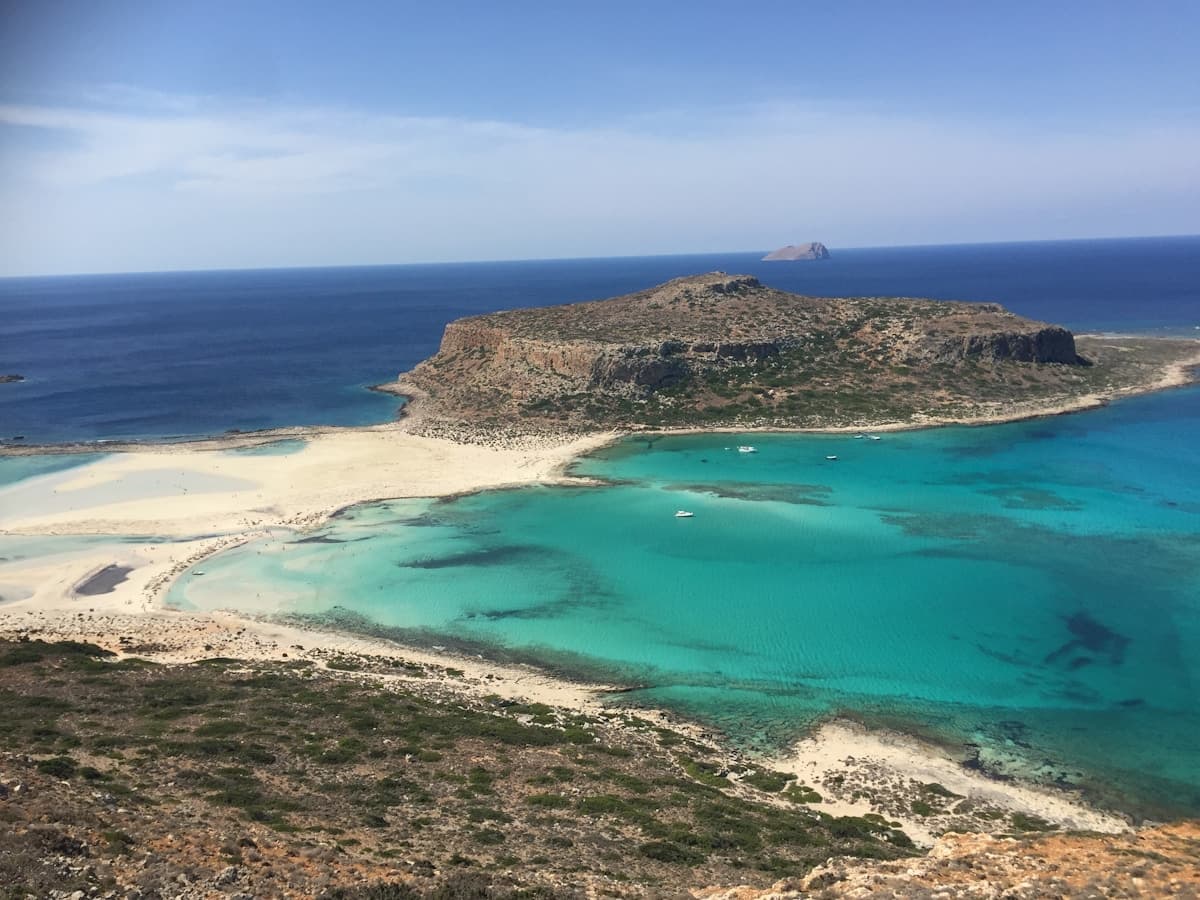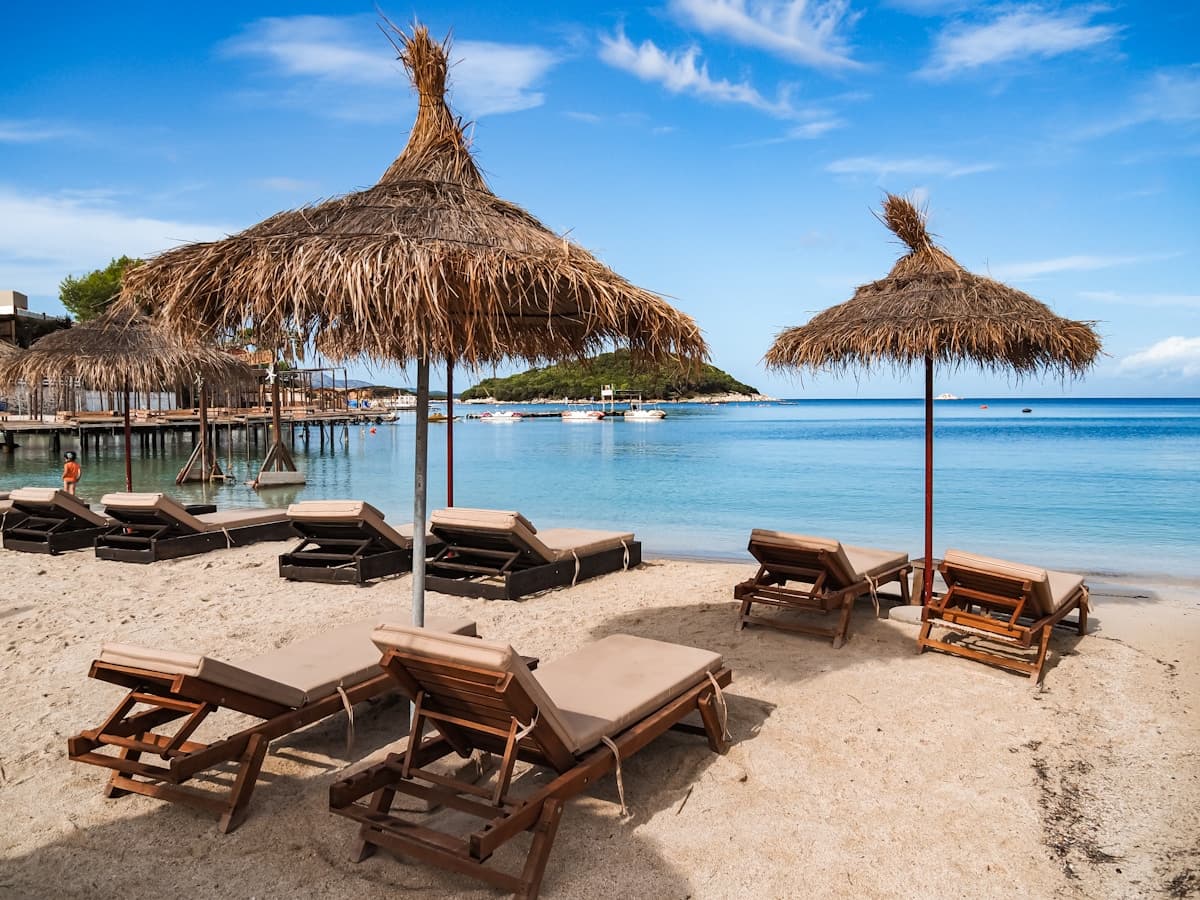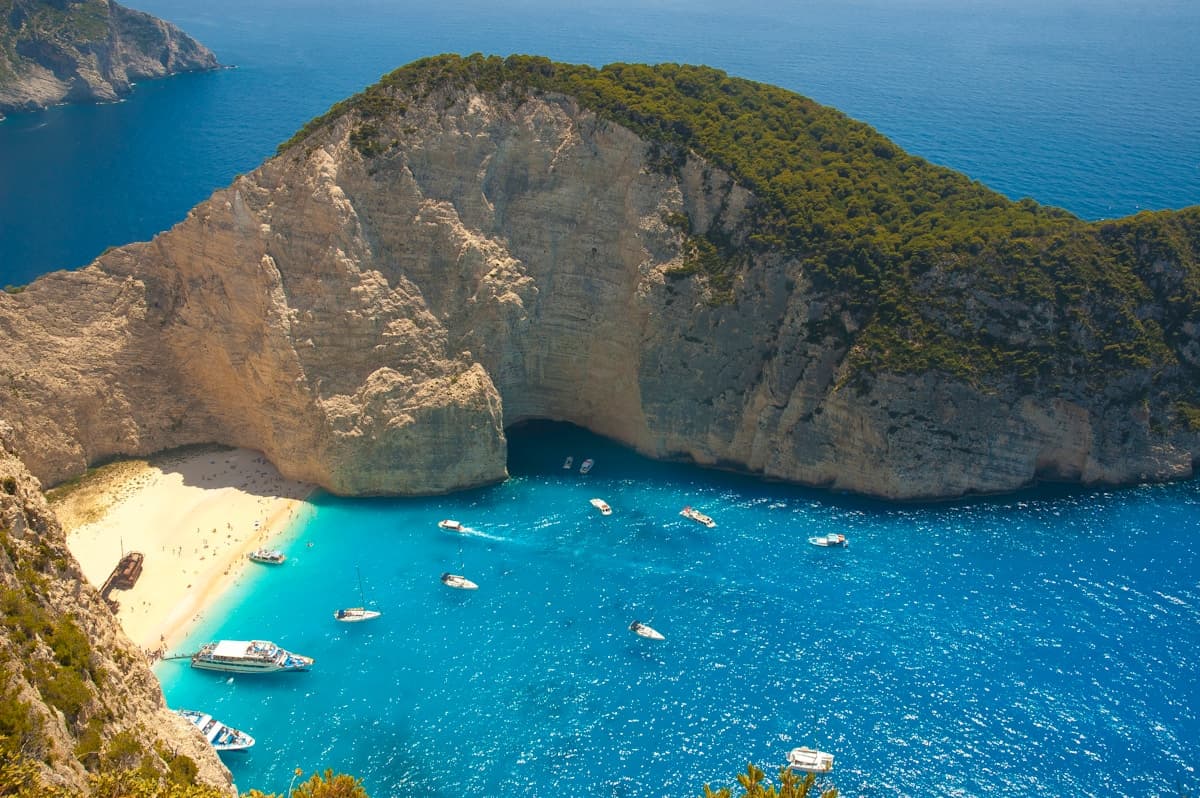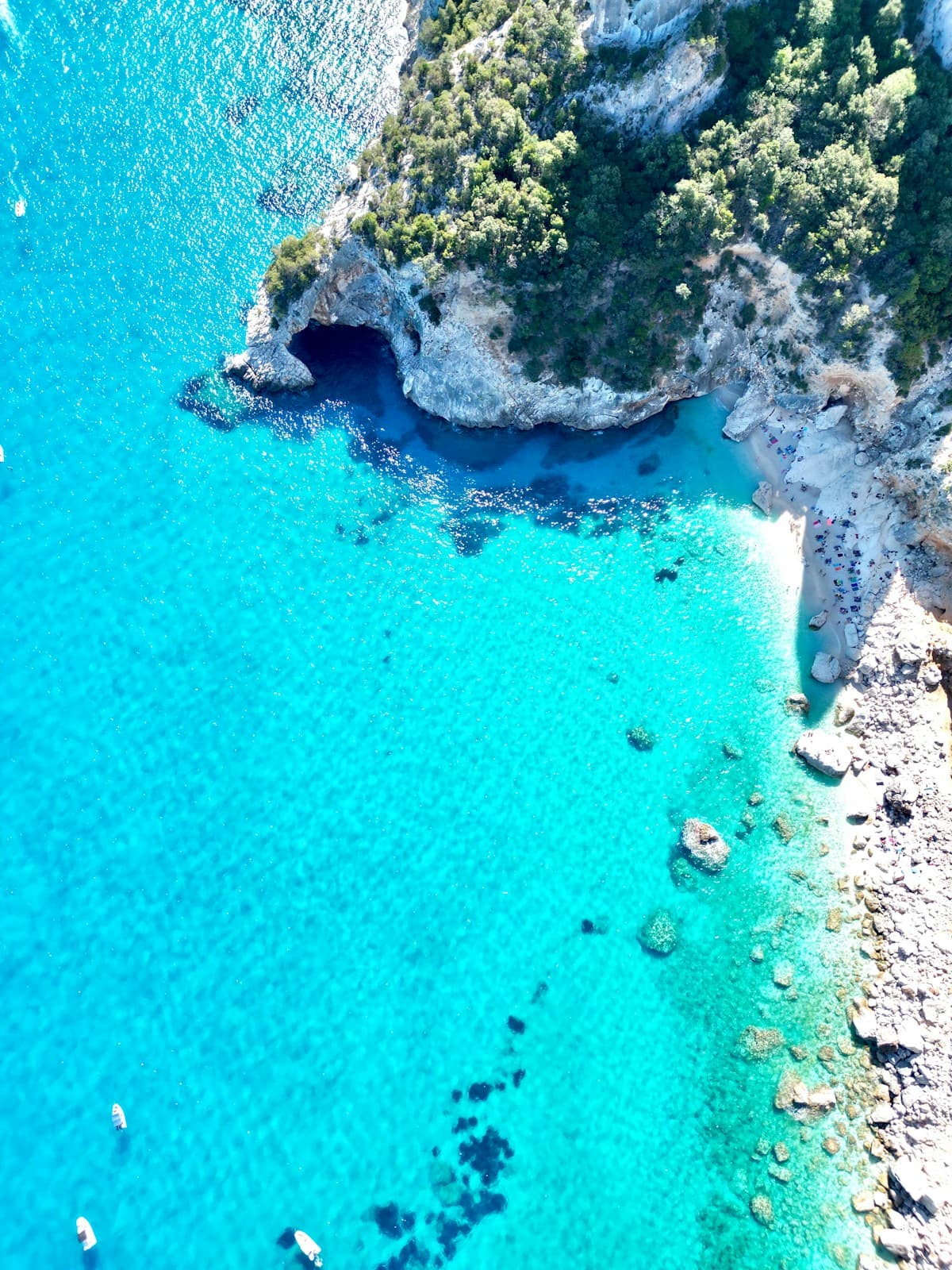
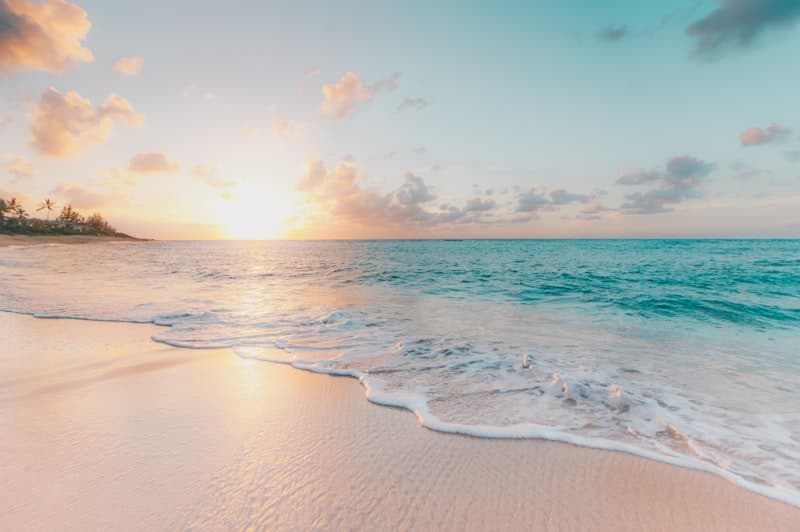
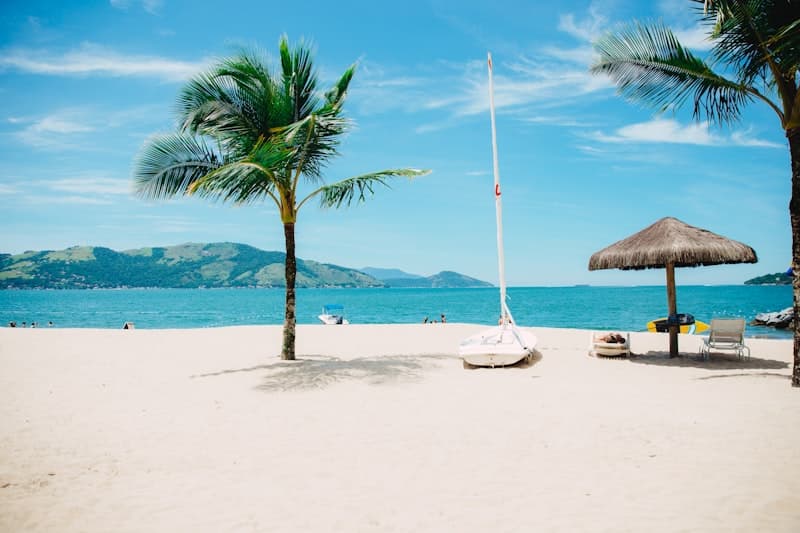
The first time you see Cala Goloritzé from the clifftop trail above, you stop walking. Everyone does. The water below is so impossibly clear that boats anchored offshore appear to float in midair, their shadows painted on the white pebble seafloor ten meters down. It is one of those places that looks fake in photos and even more unreal in person.
Tucked into the eastern coast of Sardinia along the Gulf of Orosei, Cala Goloritzé beach Sardinia has earned its reputation as one of the most beautiful coves in the entire Mediterranean. The Italian government declared it a natural monument in 1995, and once you arrive, you will understand why they went to the trouble.
The Pinnacle and the Cove
What sets this beach apart from every other gorgeous Sardinian cove is the Aguglia, a 148-meter limestone spire that shoots straight up from the southern edge of the beach like a cathedral tower. Rock climbers come from across Europe to scale it, and watching them work their way up the sheer face while you sit on the pebbles below is oddly mesmerizing. The cliff walls surrounding the cove are streaked white and grey, carved by centuries of wind and water into shapes that feel almost sculptural.
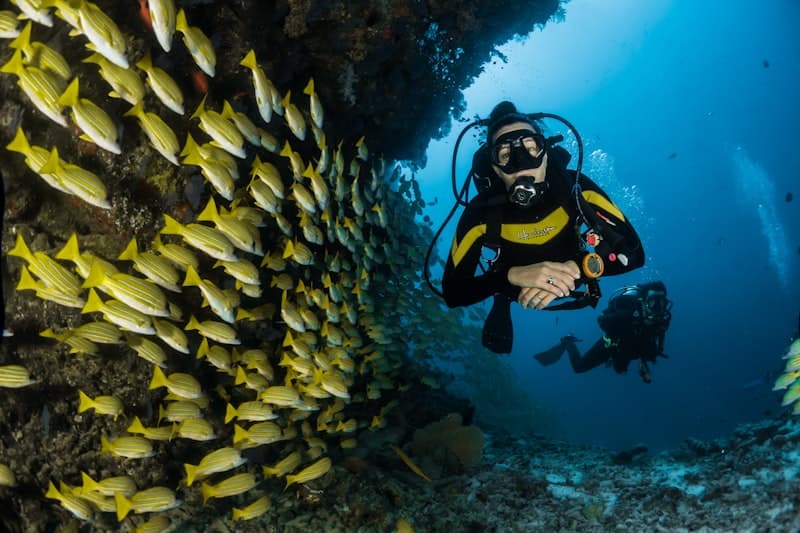
The beach itself is small. Really small. Maybe 30 meters of white pebbles and smooth stones, backed by wild olive trees and Mediterranean scrub. During peak summer, it fills up fast, and finding a spot to lay your towel can feel competitive by mid-morning. The water, though, is the real draw. Visibility regularly exceeds 20 meters, and the color shifts from pale aquamarine near shore to a deep sapphire blue just beyond the rocks. Snorkeling here is outstanding, with schools of fish drifting through underwater rock formations that catch the light in ways that keep you diving down for a closer look.
Getting There: The Hike Down
There is no easy way to reach Cala Goloritzé, and that is part of its appeal. The most common route starts at the Altopiano del Golgo, a high plateau above the town of Baunei in eastern Sardinia. You drive up a winding road to a parking area near the rural church of San Pietro, where you will pay around 6 euros for parking. In high season, get there before 9 AM or you will struggle to find a spot.
The trail is roughly 3.5 kilometers and drops about 470 meters in elevation. Going down takes around an hour. Coming back up takes longer, usually 75 to 90 minutes, and you will feel every one of those minutes in your legs. The path starts out gentle through forest, then gets progressively steeper and rockier. The final descent involves some scrambling over boulders, with a fixed rope section that can be slippery. Wear proper hiking shoes, not flip-flops. Every summer, people attempt this trail in sandals and regret it.
Bring at least two liters of water per person. There is no shade on parts of the trail and no water source along the way. There are no facilities at the beach either: no bar, no bathroom, no trash cans. You carry everything in and carry everything out.
The Boat Option
If hiking is not your thing, boats run regularly from Cala Gonone, Santa Maria Navarrese, and Arbatax during summer. A day trip by boat typically costs between 35 and 50 euros per person, and most tours stop at several beaches along the Gulf of Orosei, giving you about an hour or so at Goloritzé. One important detail: boats are not allowed to land directly on the beach. They anchor offshore, and you swim or wade in. If you are not comfortable in the water, this can be a challenge.
The boat option is easier on the legs but gives you far less time at the beach. The hikers have it better in that regard. You set your own schedule, arrive early, and can stay until late afternoon when the crowds thin out and the light turns golden on the cliffs.
When to Visit
The beach is best from June through September, with July and August being the warmest and most crowded months. Water temperatures hover around 24 to 26 degrees Celsius in midsummer, which is perfect for long swims. June and September are slightly cooler but significantly quieter, and the trail is more pleasant without the intense midday heat. The Sardinian sun is strong at this latitude, so sunscreen and a hat are not optional.
Weekdays are noticeably less busy than weekends, especially in July and August when Italian holidaymakers descend on the Orosei coast in large numbers. If you can plan your visit for a Tuesday or Wednesday in mid-June, you might have stretches of the beach nearly to yourself.
What You Should Know
Cala Goloritzé is a protected national monument. Taking pebbles, sand, or shells from the beach is illegal, and fines are steep. This rule is enforced, and locals take conservation seriously. Pack a mesh bag for your snorkel gear and leave nothing behind.
The nearest towns with hotels and restaurants are Baunei and Santa Maria Navarrese. Baunei sits up in the mountains and has a rugged, authentic feel with a handful of good agriturismos where you can eat roast suckling pig and drink Cannonau wine for reasonable prices. Santa Maria Navarrese is down on the coast and more tourist-oriented, with a small marina and several beachfront restaurants. Budget around 60 to 120 euros per night for accommodation, depending on the season and your standards.
Cell phone reception at the beach is spotty at best. Tell someone where you are going and when you expect to be back, especially if you are hiking alone.
The Honest Take
Cala Goloritzé is genuinely extraordinary. The combination of the pinnacle, the cliffs, and that ridiculous water clarity creates a setting that very few beaches in Europe can match. But it demands effort. The hike is real, the facilities are nonexistent, and in peak summer the small beach can feel crowded and competitive. If you want a lounger and a cocktail brought to you, this is not your beach.
If you want the kind of place that reminds you why you started traveling in the first place, put on your hiking boots, fill your water bottles, and start walking down. The climb back up will hurt. It is worth it.