You have probably seen this beach before you ever decide to visit it. Anse Source d'Argent shows up on desktop wallpapers, travel magazine covers, and half the "world's best beaches" lists ever published. When you finally stand between those enormous granite boulders with warm Indian Ocean water lapping at your ankles, the strange thing is that it still surprises you. Photos never quite capture the scale of the rocks or the way the light shifts across the sand as clouds pass overhead.
What Makes Anse Source d'Argent Seychelles So Iconic
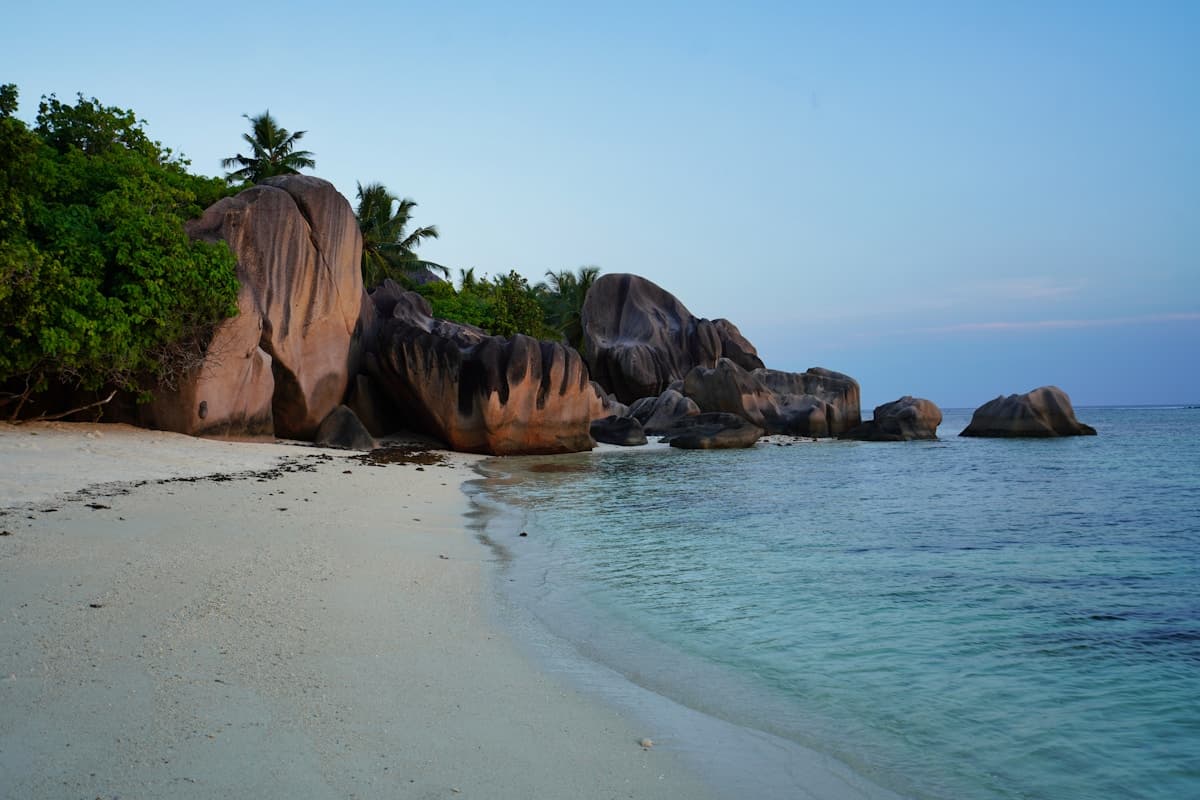
The beach stretches along the southwest coast of La Digue, the third most populated island in the Seychelles archipelago, which really just means a few thousand residents and a handful of guesthouses. What sets this place apart is geology. Massive granite boulders, some of them several stories tall and weathered into smooth, organic shapes over millions of years, divide the shoreline into a series of small coves and pockets of sand. Each section feels like its own private beach, framed by rock on both sides and backed by coconut palms.
The water is shallow and warm year-round, protected by an offshore coral reef that keeps the waves gentle. You can wade out fifty meters and still be waist-deep in places. The reef also means conditions stay calm even when other Seychelles beaches get rougher during the southeast monsoon from May through September. For families with small children, or anyone who just wants to float without fighting current, it is hard to beat.
Getting to La Digue and Reaching the Beach
Reaching anse source d'argent seychelles takes a bit of island-hopping, which is part of the appeal. Most international flights land at Mahé, the main island. From there, you have two options to reach Praslin: a quick 15-minute domestic flight with Air Seychelles, or a one-hour ferry crossing with Cat Cocos. Both are straightforward to book, though the ferry can get choppy during monsoon season.
From Praslin, the Inter Island Ferry runs regular service to La Digue. The crossing takes about 15 minutes and costs around 210 SCR (roughly $15) each way. Ferries run several times daily, and you can buy tickets at the jetty or online.
Once you are on La Digue, forget about cars. The island has barely any, and you will not need one. Head to one of the bicycle rental shops near the jetty and grab a bike for about 150 SCR per day ($11). Cycling is how almost everyone gets around here, and the ride from the ferry terminal to L'Union Estate takes about ten minutes along flat, shaded roads. It is genuinely one of the more pleasant commutes you will ever have.
L'Union Estate and the Entrance Fee
You cannot walk straight onto Anse Source d'Argent from the road. The beach sits within L'Union Estate, a former coconut and vanilla plantation that now operates as a heritage park. Entrance costs 115 SCR (about $8.50 or €8), and the ticket is valid for the full day, so you can leave and come back.
The estate itself is worth a wander. You will pass a traditional copra mill, giant Aldabra tortoises lumbering around in a pen, and a colonial-era plantation house. The path to the beach leads through coconut groves and opens up to the first stretch of sand after about a five-minute walk. It is well-signed and easy to follow.
Timing Your Visit to Beat the Crowds
This is not a secret beach. Tour operators on Praslin sell day trips to La Digue, and the ferries start bringing groups across by mid-morning. Between 10am and 2pm on a busy day, the most popular coves nearest the estate entrance can feel packed. Not unbearable, but you will be sharing the sand with a lot of selfie sticks and guided groups.
The solution is simple. Get there early. The estate opens at 7am, and if you are staying on La Digue, you can be on the beach by 7:15 with almost nobody around. The morning light at that hour is also the best for photography, with soft golden tones bouncing off the granite. Late afternoon works well too, as the day-trippers catch their ferries back to Praslin around 3 or 4pm, and you get the coves mostly to yourself again.
Walk past the first couple of beach sections and you will find progressively quieter spots. The further south you go along the shoreline, the fewer people you encounter. Some of the most photogenic boulder formations are actually in these less-visited stretches.
Snorkeling and Swimming Conditions
The reef keeps the water calm, but it also means the sand gets stirred up in the shallows, so water clarity is good but not exceptional compared to deeper Seychelles snorkeling spots. You will see tropical fish, small rays, and the occasional sea turtle if you are patient. Bring your own mask and snorkel since there are no rental shops on the beach itself.
Swimming is easy and safe. The water temperature sits around 27 to 29 degrees Celsius throughout the year. There is almost no undertow thanks to the reef, though you should watch for shallow coral patches at low tide. Wearing reef shoes is a smart move if you plan to walk out toward the reef edge.
The Honest Cost of a Seychelles Beach Trip
There is no way around it: the Seychelles are expensive. This is not Southeast Asia. Budget accommodation on La Digue starts around €150 per night for a simple guesthouse, and mid-range options run €200 to €300. A meal at a local restaurant will cost 200 to 400 SCR ($15 to $30) per person, though you can eat cheaper at takeaway spots in La Passe village where a fish curry with rice runs about 100 SCR.
Add in inter-island ferries (around 420 SCR return from Praslin), the estate entrance fee, bike rental, and meals, and you are looking at a minimum daily spend of roughly €60 to €80 per person even on a tight budget, before accommodation. A couple staying three nights on La Digue should budget at least €800 to €1,200 total including flights to Praslin, ferries, accommodation, food, and activities.
That said, the Seychelles deliver something you cannot get from a cheaper destination. There is a quietness to La Digue that money buys, even if indirectly. No high-rise hotels. No jet skis. No beach vendors hassling you every five minutes. Just granite, sand, warm water, and palm trees.
Practical Tips Worth Knowing
Bring your own water and snacks. There is a small kiosk near the beach entrance selling drinks and basic food, but prices are marked up and selection is limited. Sunscreen is essential since shade is scarce unless you tuck yourself against a boulder.
The best months for weather are April to May and October to November, the transition periods between monsoon seasons. Skies tend to be clearer, humidity is lower, and the sea is at its calmest. The southeast monsoon from May to September brings more wind and occasional clouds, though temperatures stay warm. The northwest monsoon from December to March brings rain, sometimes heavy, but also warmer seas and greener vegetation.
If you have time, explore beyond Anse Source d'Argent. La Digue has several other excellent beaches, including Grand Anse and Petite Anse on the wilder east coast. These are bigger, less sheltered, and far emptier. The contrast between the calm western shore and the rougher eastern beaches gives you a real sense of how small and varied this island is.
Is It Worth the Trip and the Cost?
Anse Source d'Argent is a beach that lives up to its reputation, which is rare. The granite boulders are extraordinary. The water is warm and gentle. The setting feels genuinely untouched despite being one of the most visited spots in the Seychelles. Yes, you will pay more to be here than at almost any other tropical destination, and yes, the midday crowds can dull the magic. But stand between those ancient rocks at sunrise with the sand still cool under your feet, and you will understand why this beach ends up on so many lists. Some places earn their fame.