You hear about Playa de Sotavento long before you see it. If you spend any time in Fuerteventura, someone will mention the lagoon, the kites, the wind. When you finally pull off the FV-2 highway and walk down through the scrubby dunes to the sand, you understand what all the fuss is about. This beach stretches for roughly six kilometers along the Jandia peninsula, and at low tide a shallow turquoise lagoon opens up between the shore and a long sandbar that feels like it belongs somewhere in the Caribbean rather than a couple of hours from mainland Spain.
The Lagoon at Low Tide
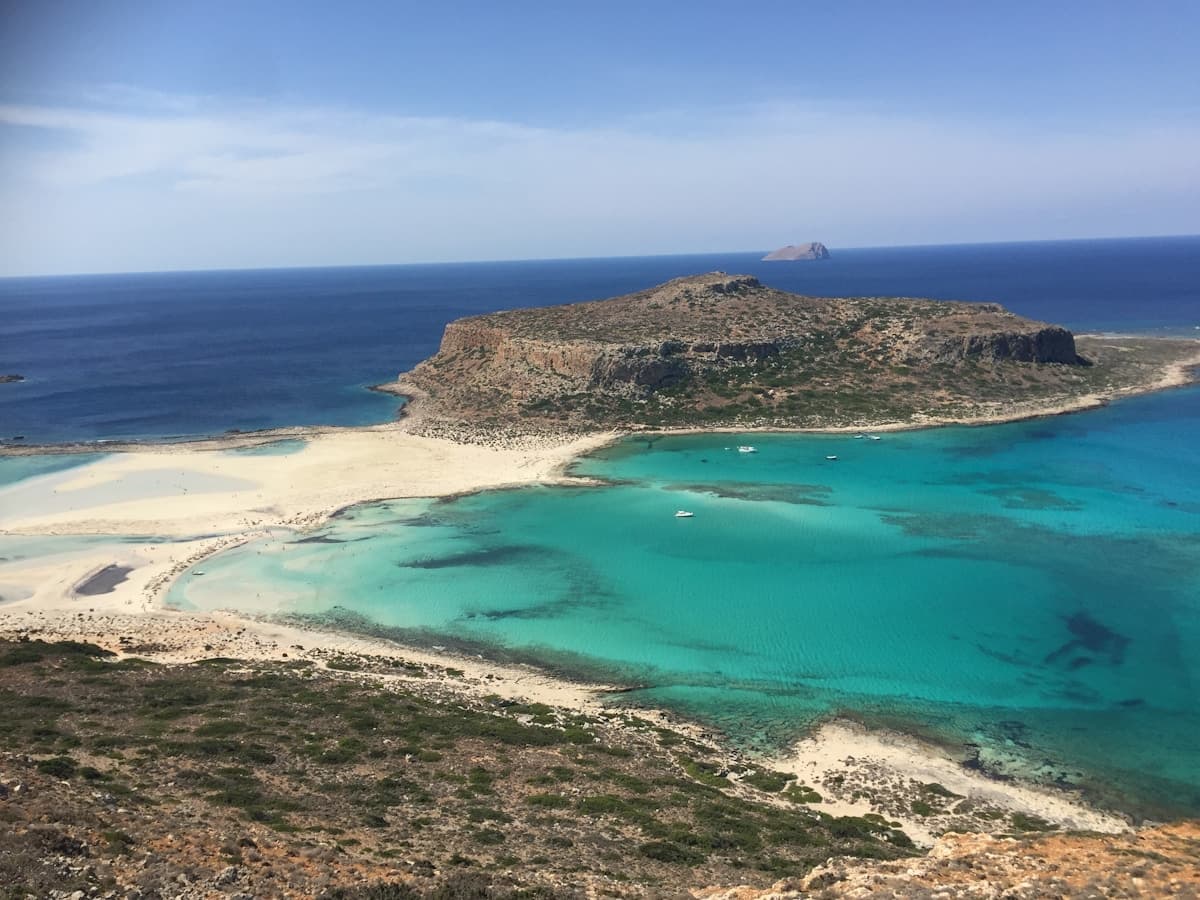
The lagoon is the main event at Playa de Sotavento Fuerteventura. When the tide drops, the ocean pulls back and leaves a broad, knee-deep pool of warm water sitting on top of golden sand. It is flat, calm, and so clear you can count the ripples your feet make from twenty meters away. Kids splash around in it safely. Photographers set up for that classic shot of the sandbar curving into the distance with the mountains of Jandia rising behind.
The size of the lagoon varies with the tides and the season. On a good low tide in summer, it can stretch hundreds of meters wide. The water is bathtub warm and barely reaches your thighs in most spots. It is genuinely one of the most photogenic natural features on any European beach, and the reason most visitors come here in the first place.
Timing matters, though. At high tide the lagoon disappears entirely, and the beach looks like a normal (if beautiful) stretch of sand with waves breaking directly on shore. Check a tide table before you go. Low tide in the morning is ideal because the light is softer and the wind tends to be lighter early in the day.
Kitesurfing Capital of the Canary Islands
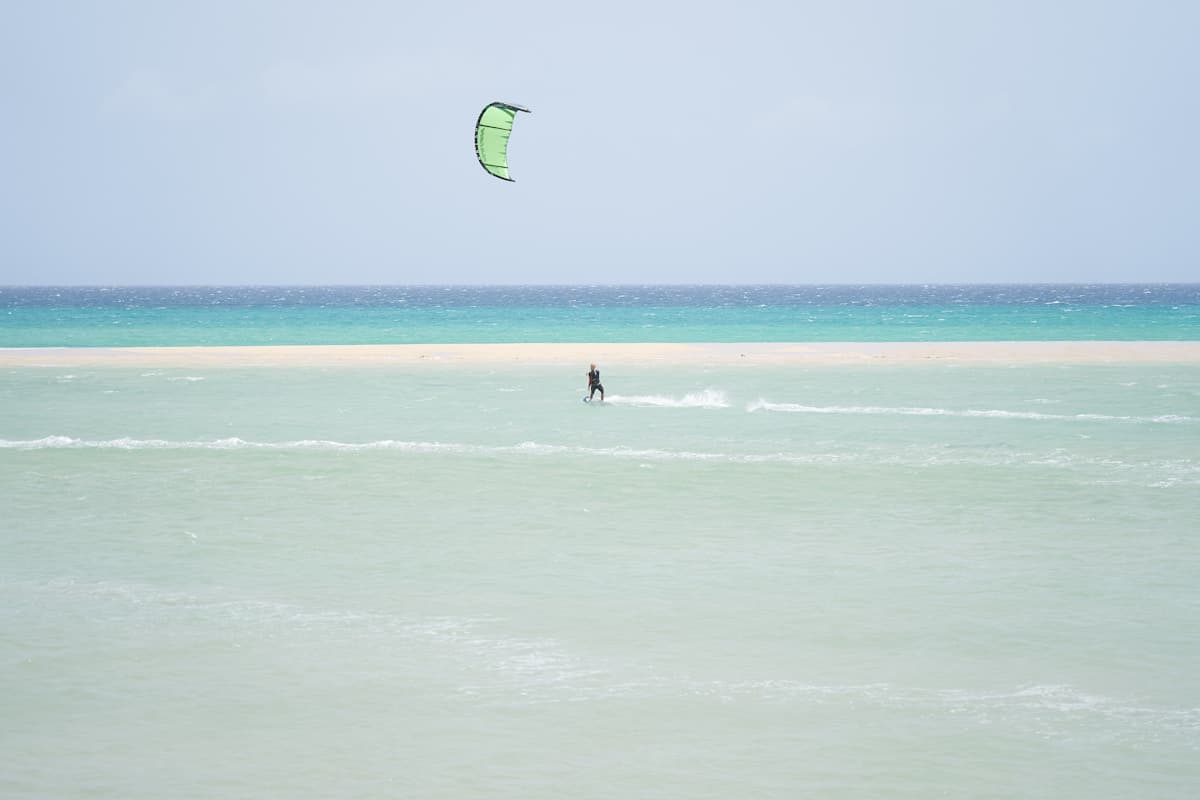
Playa de Sotavento is not just a pretty beach. It is one of the top kitesurfing spots in the world, and the venue for a regular stop on the GKA Kite World Tour (formerly the Kiteboarding World Championships). The event usually lands in July, drawing professional riders and thousands of spectators to this stretch of coast.
The conditions here are almost absurdly good for kite sports. Fuerteventura sits in the path of the northeast trade winds, and Sotavento catches them perfectly. Between May and October you can count on consistent winds averaging 20 to 30 knots most afternoons. The flat water of the lagoon at low tide gives beginners a forgiving surface to learn on, while the open ocean side offers waves and chop for more advanced riders.
Several kitesurfing schools operate directly on the beach, offering lessons and gear rental. A beginner course typically runs around 150 to 200 euros for a few hours, and the instructors are used to working with total beginners. Even if you never clip into a harness yourself, watching dozens of colourful kites arcing across the sky while riders launch off the water is genuinely entertaining.
Wind Conditions and What They Mean for You
Here is the thing about Sotavento that catches some visitors off guard: it is windy. Really windy, almost all the time. The same trade winds that make kitesurfers happy can make a casual beach day uncomfortable if you are not prepared. Sand blows across the flats, towels try to escape, and reading a book becomes an exercise in frustration.
If you are coming here to sunbathe and relax, bring a windbreak or set up in the dunes where the scrubby vegetation offers some shelter. Some visitors stake out spots near the beach bar where the building itself blocks the worst of the breeze. The mornings tend to be calmer, with the wind building through the afternoon, so plan your lounging for the first half of the day if wind bothers you.
Winter months from November to March are slightly less windy on average, and Fuerteventura's year-round warmth means beach days are possible even in January. Expect air temperatures around 20 to 22 degrees in winter, which is pleasant enough with the sun on your skin.
Getting There from Costa Calma and Morro Jable
Sotavento sits roughly halfway between the two main resort towns on the Jandia peninsula. From Costa Calma, drive south on the FV-2 for about ten minutes. From Morro Jable, head north for around fifteen minutes. Several signposted turn-offs along the highway lead down dirt tracks to parking areas right behind the dunes.
Parking is free at all the access points, which is a welcome change from beaches that charge for the privilege. The lots are unpaved and can get dusty, but they are well maintained. During peak summer months and especially during the kitesurfing championships, the closest lots fill up by late morning. Arriving before 10am sorts that problem out.
If you are staying in Costa Calma and do not have a car, cycling is a solid option. The road is flat and straightforward. The local bus lines 1 and 5 run between Costa Calma and Morro Jable along the FV-2, though there is no stop directly at the beach. You would need to walk from the nearest drop-off point, which adds maybe fifteen to twenty minutes depending on which access path you use.
The Beach Bar and Facilities
There is a beach bar at the main access point near the Meliá Gorriones hotel that serves drinks, snacks, and simple meals. It is nothing fancy, but a cold beer and some patatas bravas after a few hours in the wind hits the spot. Prices are tourist-level but not outrageous, maybe four to five euros for a beer and eight to twelve for a basic lunch plate.
Beyond the bar, facilities are minimal. There are no sunbed rentals on most of the beach, no showers, and just basic portable toilets near the parking areas. The kitesurfing schools have their own setup zones with equipment storage, but for the average beachgoer, you are mostly on your own. Bring water, sunscreen, and whatever you need for the day.
The hotel end of the beach has slightly more infrastructure, with the Meliá property offering pool access and restaurant service to its guests. But the best stretches of sand and lagoon are further along, away from any buildings, where the beach feels wild and open.
Practical Tips for Your Visit
Walk south along the beach from the main parking areas and things get progressively quieter. The lagoon is at its widest and most photogenic in the middle sections, roughly a fifteen-minute walk from the car park. If you want solitude, keep going. Six kilometers of sand means there is always room.
Sun protection is essential. The Canary Islands sit at a similar latitude to southern Morocco, and the UV is strong even on hazy days. The wind has a cooling effect that tricks you into thinking you are fine, and then you end up burnt. Factor 50, a hat, and reapplying regularly will save you.
For photographers, the golden hour before sunset is spectacular here. The low light catches the wet sand of the lagoon and the mountains glow orange behind the kites still working the last of the day's wind. It is one of those scenes that justifies dragging a camera across the beach.
Playa de Sotavento is not a sheltered, palm-fringed cove. It is big, open, windswept, and wild. That is exactly what makes it special. If you want a beach that feels like the edge of something, where the Atlantic trades whip across the sand and the lagoon shimmers like something out of a nature documentary, this is the one. For something wilder on the same island, the remote Playa de Cofete on the opposite coast is worth the rough drive. And if you are looking for warm beach holidays in October, Fuerteventura is one of the best bets in Europe.