Kuta Beach is probably not what you picture when you think of a Bali beach holiday. There are no overhanging palm trees framing turquoise water. No quiet stretch of sand where you can hear nothing but the waves. Kuta is loud, crowded, commercial, and a little rough around the edges. It is also the place where millions of people fall in love with Bali for the first time, and there are real reasons for that.
This is the beach that put Bali on the backpacker map in the 1970s, and it has grown into something completely different since then. The original surfer vibe is still there if you squint, buried under layers of shopping malls, nightclubs, massage parlours, and enough souvenir shops to stock a small country. But Kuta Beach Bali still draws enormous crowds every single day, and writing it off as "too touristy" means missing what it actually does well.
The Beach Itself
Kuta Beach stretches for about three kilometres of wide, flat, grey-gold sand from the airport end up toward Legian and Seminyak. The sand is coarser than the white powder you find on Bali's eastern beaches or out on the Gili Islands. It is perfectly fine for walking, sunbathing, and building sandcastles, but it will not make any magazine covers.
The water is warm year-round, sitting around 27 to 29 degrees Celsius. Visibility is the weak point here. Kuta faces the Indian Ocean and catches a lot of swell, which keeps the water churned up and sandy. During the wet season from November through March, plastic waste and river runoff can make the water genuinely unpleasant. The dry season is significantly better, though you are never going to mistake this for a snorkelling destination. If crystal-clear water is your priority, Kuta is not your beach. Full stop.
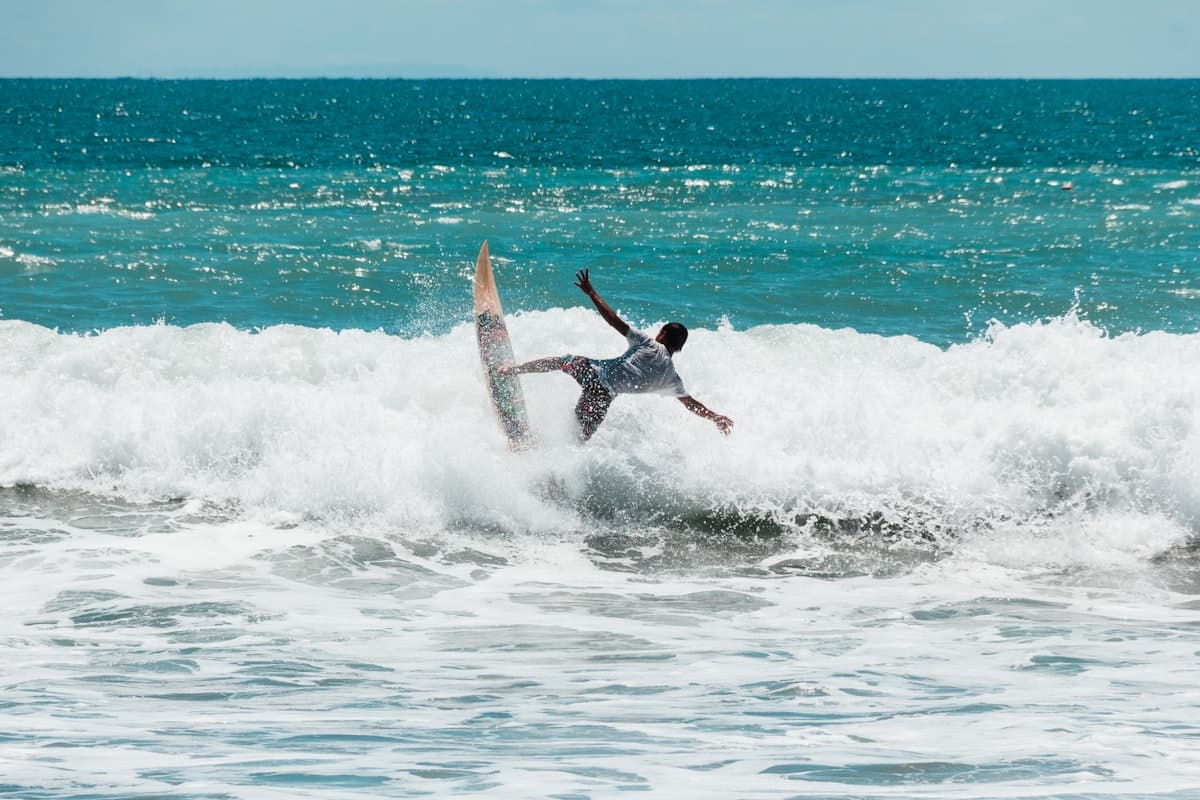
What Kuta does have is a solid, consistent wave break that rolls in over a sandy bottom with no reef or rocks to worry about. That combination is exactly why it became a surf town in the first place.
Surfing at Kuta Beach
For beginner and intermediate surfers, Kuta Beach Bali is hard to beat. The waves break gently over sand, so when you fall off your board (and you will, repeatedly), you are landing on soft ground instead of sharp coral. The whitewash section close to shore is forgiving and predictable, which gives first-timers a real chance at standing up on their first session.
Surf schools line the beach road, and competition keeps prices reasonable. A two-hour group lesson with board rental runs about 350,000 to 500,000 IDR ($22 to $32 USD). Private lessons cost more, around 500,000 to 700,000 IDR ($32 to $45 USD), and are worth it if you want proper attention from an instructor. Board rentals on their own go for about 50,000 to 100,000 IDR per hour ($3 to $6 USD).
More experienced surfers tend to head to the reef breaks at Padang Padang, Uluwatu, or Canggu. Kuta's waves are fun but they top out around waist to chest height on most days. When a bigger swell rolls in, the breaks further down toward the airport can produce some decent rides, but Kuta proper stays mellow.
The Sunset Factor
Here is the thing about Kuta that even the snobs have to admit: the sunsets are absurd. Kuta Beach faces directly west across the Indian Ocean with nothing between you and the horizon. Between May and September, the evening sky turns into a full production, deep oranges bleeding into purples and pinks while the silhouettes of surfers paddle across the reflection. It is free, it happens every evening, and it is genuinely one of the best sunset spots in Southeast Asia.
Grab a cold Bintang from one of the beach vendors (about 30,000 IDR, or $2 USD), find a spot on the sand, and sit there until the light fades. This is Kuta at its best. The crowds thin out a bit, the temperature drops to something comfortable, and for about 30 minutes you understand why people keep coming back.
Eating and Drinking
The food scene around Kuta is massive and covers every budget imaginable. At the cheap end, warungs (local food stalls) along the back streets serve nasi goreng, mie goreng, and chicken satay for 25,000 to 50,000 IDR ($1.50 to $3 USD). A plate of nasi campur from a local spot costs about the same and will fill you up completely.
Mid-range restaurants along Jalan Legian and Poppies Lane serve everything from wood-fired pizza to pad thai to fish and chips, typically running 60,000 to 150,000 IDR ($4 to $10 USD) per main course. The quality varies wildly. As a general rule, the places packed with locals are your best bet. The ones with aggressive touts standing outside the door are usually not.
For nightlife, Kuta is the undisputed party capital of Bali. Jalan Legian is the main strip, lined with bars and clubs that get going around 10 PM and run until the early hours. Sky Garden is the big multi-level club that everyone ends up at least once. Beers in the bars and clubs run about 40,000 to 60,000 IDR ($2.50 to $4 USD), and cocktails go for 80,000 to 120,000 IDR ($5 to $8 USD). Cover charges are rare unless there is a special event.
Staying Safe and Comfortable
Kuta is generally safe for tourists, but it pays to keep your wits about you. Petty theft and bag snatching on scooters happen, so keep your phone and wallet secure and do not leave valuables on the beach. The touts along the main streets can be persistent, but a firm "no thank you" works. Do not engage in long conversations if you are not interested in buying.
On the beach, stick to the areas between the lifeguard flags for swimming. Rip currents are real at Kuta, especially when the swell picks up. The lifeguards are well-trained and active, which is one advantage of a busy, well-resourced beach. Sun lounger and umbrella rentals cost about 50,000 to 100,000 IDR ($3 to $6 USD) for the day.
Traffic around Kuta is brutal, particularly along Jalan Legian and the roads near the beach. Walking is often faster than driving for short distances. Grab and Gojek work well for longer trips, though some drivers will not pick up right on the main tourist strips due to taxi mafia pressure. Walk a block or two off the main road and you will get a ride easily.
Who Kuta Beach Is For
Kuta Beach is not trying to be a hidden gem. It is not pretending to be untouched or exclusive. If you want quiet, go to the east coast. If you want Instagram-perfect water, book a boat to Nusa Penida. For a wilder side of Bali, the clifftop trail down to Kelingking Beach is worth the effort. Kuta is for people who want convenience, affordability, a solid beginner surf break, world-class sunsets, and easy access to food and nightlife without having to drive 45 minutes to find a restaurant.
It works well as a first stop in Bali, especially if you are arriving on a late flight and need somewhere close to the airport with plenty of options. A few nights in Kuta to get your bearings, catch some waves, and eat your weight in nasi goreng before moving on to quieter parts of the island is a perfectly solid plan. If you are weighing up destinations, our guide to the best beach holidays in Europe covers some alternatives closer to home.
The Honest Take
Kuta Beach Bali will not blow your mind with natural beauty. The water is not clear, the sand is not white, and you will share every square metre with other tourists, vendors, and surf instructors. But it delivers where it counts: cheap food, reliable waves for learning, a nightlife scene that runs seven days a week, and sunsets that will stop you mid-sentence. Come with the right expectations, and Kuta is a good time. Come expecting a tropical paradise, and you will be disappointed. That is just the truth of it.