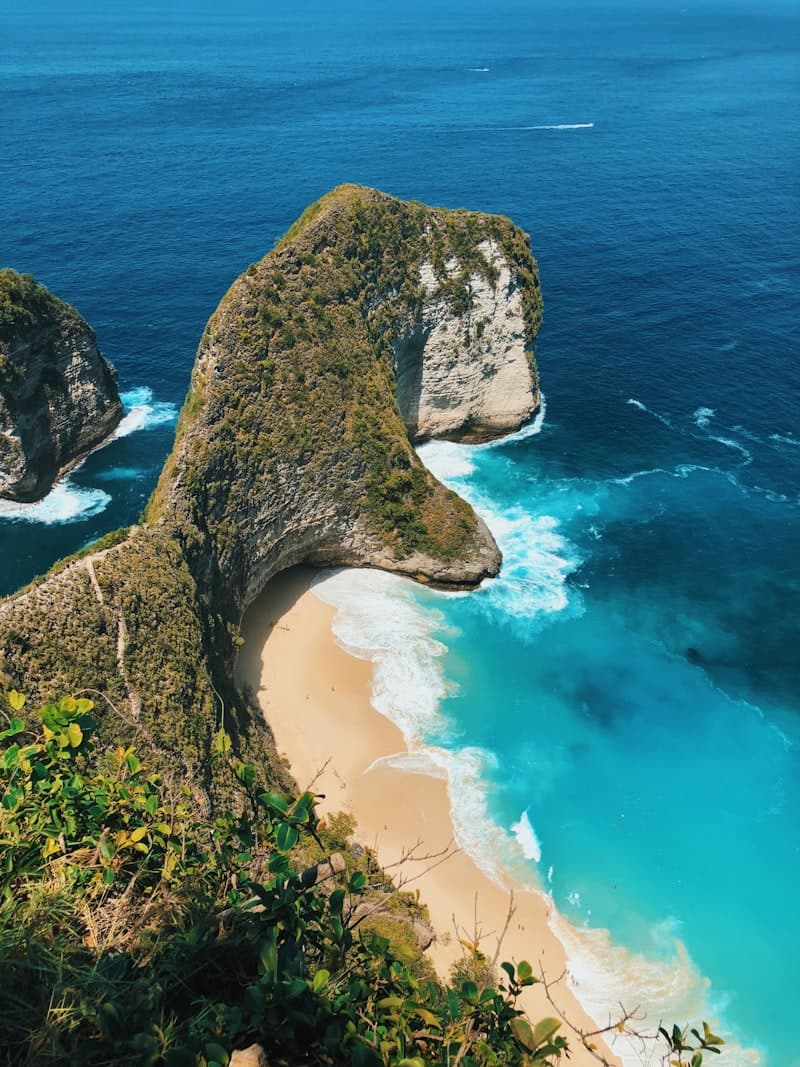
You will hear Kelingking Beach called many things. The T-Rex. The most Instagrammed spot in Bali. A bucket list beach. All of that is true, but none of it prepares you for the moment you walk to the cliff edge and look down. The scale of this place is absurd. A massive limestone headland juts out into the Indian Ocean in a shape that genuinely looks like a Tyrannosaurus Rex lowering its head to drink, and 400 meters below, a strip of white sand curves along water so blue it looks digitally enhanced. It is not.
Kelingking sits on the southwestern coast of Nusa Penida, a rugged limestone island about 20 kilometers off the southeast coast of Bali. For years this island was a backwater, too rough and undeveloped for most tourists. Then drone photography happened, and suddenly everyone on earth wanted a photo from that clifftop. The viewpoint is now one of the most visited spots in all of Indonesia, and for good reason. But the beach itself? That is a different story entirely.
The Viewpoint vs. The Beach
Let's be honest about this upfront: the vast majority of visitors to Kelingking Beach never touch the sand. They walk from the parking area to the viewpoint, take their photos with the T-Rex cliff behind them, and leave. There is absolutely no shame in this. The viewpoint is spectacular, it is free, and it takes about five minutes of easy walking from where you park. You get one of the great views in Southeast Asia without breaking a sweat.
The beach below is another proposition altogether, and you need to understand what you are getting into before you start down.
The Descent
The trail from the viewpoint to the beach drops roughly 400 meters over a path that takes somewhere between 30 and 45 minutes going down. That sounds manageable until you see it. This is not a maintained hiking trail. It is a steep, crumbling dirt-and-rock scramble cut into the cliff face, reinforced in places with rope handrails, rickety bamboo ladders, and wooden stakes driven into the hillside. Sections are nearly vertical. The ground is loose and sandy, the kind that slides out from under your feet without warning. There is essentially zero shade for the entire descent.
People have been seriously injured on this trail. It is not a scare tactic to say that. The path has improved somewhat in recent years with better rope sections and some concrete steps near the top, but the lower half remains genuinely treacherous. Flip-flops will get you hurt. Proper shoes with grip are essential, not optional. Bring at least two liters of water per person, because the combination of tropical heat, direct sun exposure, and sustained physical effort will drain you faster than you expect.
Going down is the easy part. Coming back up is where Kelingking earns its hard rating. That same 30-minute descent becomes a 45 to 60-minute climb in 30-degree heat with no shade and no flat spots to properly rest. Your legs will burn. Your lungs will burn. You will stop frequently. Start early in the morning, ideally before 8 AM, to avoid the worst of the midday sun on the way back up. Afternoon descents are a bad idea unless you want to climb out in the dark.
The Beach Itself
If you do make it down, the reward is genuine. Kelingking Beach is stunning in the way that only truly difficult-to-reach beaches can be. The sand is fine and white, the water is impossibly clear, and the cliff walls tower around you in every direction, creating a natural amphitheater that feels wild and untouched. On a quiet morning you might share it with only a handful of other people who made the same questionable decision to descend.
Swimming is possible but comes with serious caveats. The surf here can be powerful, with strong currents and waves that break hard on the shore. During the wet season and on rough days, the water is simply too dangerous. Even in calm conditions, stay close to shore and watch the wave patterns before going in. There are no lifeguards, no rescue services, and getting help to this beach would take a very long time.
There are no facilities at the bottom. No shade structures, no toilets, no food vendors, nothing. Bring everything you need and carry your trash back out.
Getting to Nusa Penida
The journey to Kelingking starts at Sanur harbor on Bali's southeast coast. Fast boats run throughout the morning, with the crossing taking 30 to 45 minutes depending on conditions. Tickets cost around 150,000 to 200,000 IDR one way (roughly $9 to $13 USD). Book through your hotel or at the harbor. The boats are small and can be rough in choppy seas, so take motion sickness tablets if you are prone to it.
Once on Nusa Penida, you have two main options for getting around. Renting a scooter costs about 75,000 IDR per day ($5 USD) and gives you total freedom, but the roads on Nusa Penida are notoriously bad. We are talking steep, narrow, potholed concrete tracks with blind corners and oncoming traffic that does not slow down. If you are not a confident scooter rider, hire a driver instead. A full-day car charter with driver runs about 500,000 IDR ($32 USD) and is worth every rupiah for the peace of mind alone. Most drivers know all the main stops and will structure a logical route hitting Kelingking, Angel's Billabong, and Broken Beach in one loop.
When to Go
The dry season from April through October offers the best conditions. Skies are clearer, seas are calmer for the boat crossing, and the trail is less slippery. July and August are the busiest months, with the viewpoint getting genuinely packed by mid-morning. The sweet spot is May, June, or September, when the weather is good but the tourist numbers drop noticeably.
During the wet season from November through March, the trail becomes significantly more dangerous. Wet clay and mud on an already steep descent is a recipe for injuries. The seas are rougher too, making both the boat crossing and any swimming at the beach more risky.
The Honest Take
Kelingking Beach Nusa Penida is one of those places where the photos do not lie but they do not tell the whole story either. The viewpoint delivers everything you have seen online, and getting there is straightforward. The beach below is a legitimate adventure that requires fitness, proper preparation, and a willingness to suffer a bit on the return climb.
If you are reasonably fit and you start early, it is doable and deeply rewarding. If you have knee problems, a fear of heights, or you are visiting on a tight schedule with a boat to catch, enjoy the viewpoint and save the descent for another trip. Nobody ever regretted the view from the top. Pack your water, wear real shoes, leave before the heat builds, and give yourself more time than you think you need. The T-Rex is not going anywhere.