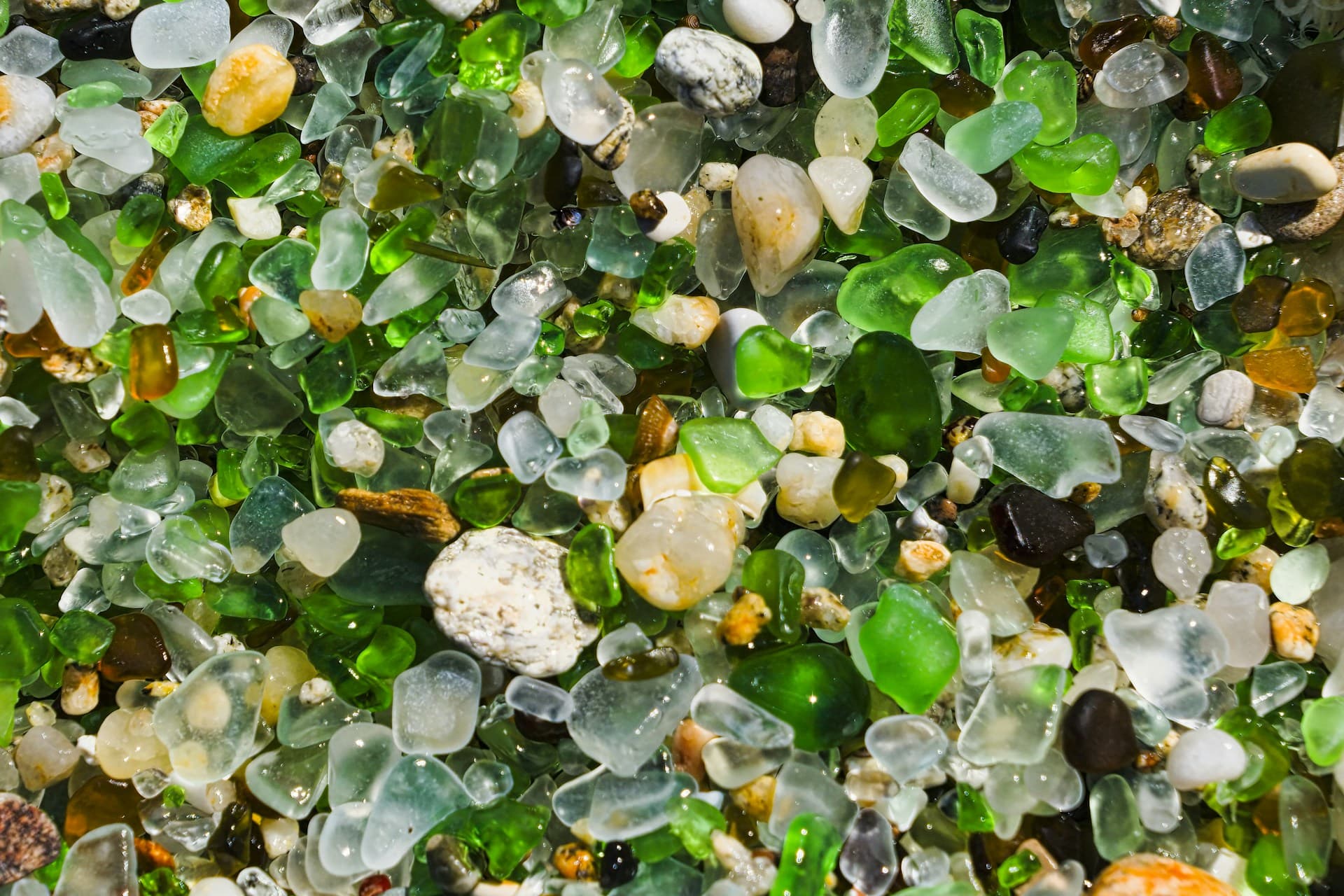
If you have ever walked along a pebbly shoreline and spotted a small, frosted gem glinting between the stones, you already know the quiet thrill of finding sea glass. It is one of those hobbies that costs nothing, gets you outside, and gives you something genuinely beautiful to take home. The UK happens to be one of the best places in the world for it, thanks to centuries of coastal industry, old bottle dumps, and a coastline that takes a proper battering from Atlantic storms. If you are already exploring the best beaches in the UK, adding a sea glass hunt to your trip is a great excuse to visit some quieter stretches of shore.
Here is where to go, what to look for, and how to come home with pockets full of the good stuff.
What Sea Glass Actually Is
Sea glass starts life as broken bottles, jars, tableware, or industrial glass waste. It ends up in the ocean through dumping, shipwrecks, or simply being tossed off piers and harbour walls over the years. Once it is in the water, waves and sand grind down the sharp edges and etch the surface into that distinctive frosted finish. The whole process takes somewhere between 20 and 50 years, which means the sea glass you find today was probably thrown away before you were born.
The colour depends on what the original glass was. Green comes from wine and beer bottles. Brown comes from medicine bottles and ale. White or clear pieces are the most common, from jars and window glass. The rare stuff, cobalt blue, red, orange, black, comes from specialty glass that was never produced in large quantities.
Seaham Beach, County Durham
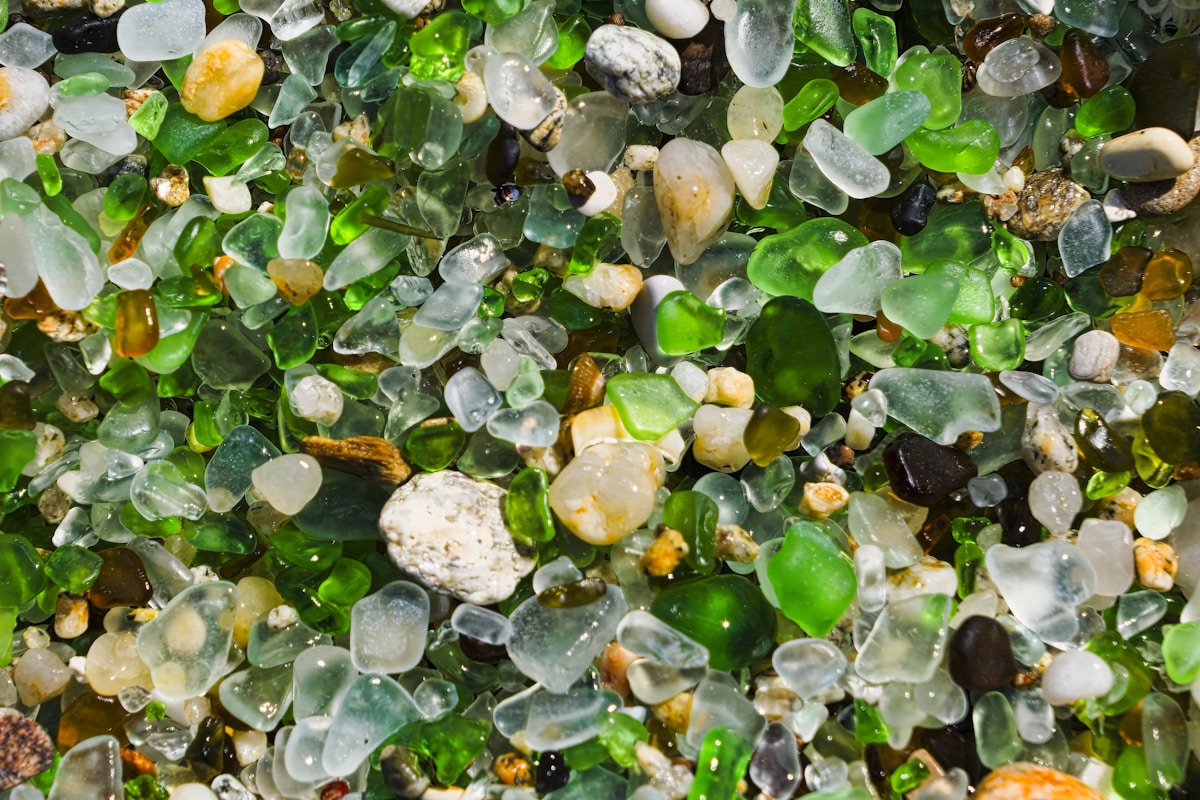
This is the one. If you are serious about sea glass, Seaham is where you need to go. The town was home to the Londonderry Bottleworks, a Victorian glass factory that operated from the 1850s and dumped enormous quantities of waste glass straight into the North Sea. The factory is long gone, but the ocean is still spitting out beautifully tumbled pieces more than a century later.
You will find colours here that barely exist anywhere else. Multi-coloured swirled pieces, deep reds, vivid yellows, and thick chunks of black glass that glow dark green when you hold them up to the light. The main stretch of Seaham Beach and the area around Nose's Point are the prime spots. Walk along the strandline at low tide and you will find pieces within minutes.
A word of warning though. Seaham's reputation means it gets busy with collectors, especially on weekend mornings and after storms. If you want the best pickings, get there early on a weekday. The beach is free to access with parking available along the seafront.
Whitby, North Yorkshire
Whitby's harbour and coastline have centuries of maritime history, and all that activity left plenty of glass in the water. The beach below the famous abbey and the stretch towards Sandsend are both productive spots. You will mostly find greens, browns, and whites here, but the occasional blue piece turns up. The pebbly sections of the beach tend to hold more sea glass than the sandy parts, so focus your searching there.
Whitby also has the advantage of being a brilliant day out beyond the beachcombing. Fish and chips on the harbour, the abbey ruins, the cobbled streets. You can easily combine a morning of sea glass hunting with an afternoon exploring the town.
Anglesey, North Wales
The beaches around Anglesey get less attention from sea glass collectors than the northeast coast, which works in your favour. Beaumaris and the smaller coves along the east coast of the island are worth exploring. Old shipping routes and harbours mean there is plenty of glass in the water, and fewer people looking for it means more left to find.
The variety here tends towards the standard greens, browns, and whites, but the pieces are often well-tumbled with a thick frost, which makes them particularly satisfying to collect. Check tide tables carefully because some of the best coves become inaccessible at high tide.
Aldeburgh, Suffolk
The Suffolk coast is not the first place most people think of for sea glass, but Aldeburgh has a long shingle beach that produces steady finds. The town has a fishing history stretching back centuries, and all those years of harbour activity put plenty of glass into the sea. Walk south from the town towards the Martello tower and work along the high-tide line. Expect mostly white and green pieces, with the odd brown one mixed in.
Portland and Chesil Beach, Dorset
The Jurassic Coast around Portland has a mix of pebble beaches that hold sea glass well. Chesil Beach is an 18-mile bank of pebbles, and while most of it is too uniform to trap much glass, the areas around Portland Harbour and Church Ope Cove can be productive. Nearby Sandbanks Beach in Poole is worth combining with a Dorset sea glass trip. Old naval activity and harbour dumping put glass into the water here over many decades. Focus on the Portland end where the pebbles are larger and sea glass gets caught between them.
Margate, Kent
Margate has been a seaside resort since the Georgian era, which means generations of visitors have been leaving glass behind. The main beach and the areas around the harbour arm produce finds throughout the year. You will not get the volume or variety of Seaham, but Margate makes up for it with accessibility. It is about 90 minutes from London by train, which makes it the easiest sea glass beach to reach from the capital.
The Turner Contemporary gallery sits right on the seafront, so you can warm up with some art if the weather turns against you mid-hunt.
Bowleaze Cove, Weymouth
Just north of Weymouth, Bowleaze Cove is a curved pebble and sand beach that quietly produces good sea glass. It does not appear on most collector lists, which keeps competition low. The cove catches debris from Weymouth Bay, and low tide exposes a rocky shelf where glass pieces accumulate. Green and white are the most common colours here, but blue pieces do turn up.
Tips for Finding More Sea Glass
Timing matters. Low tide is essential. The retreating water exposes the strandline where sea glass collects among pebbles and shells. After a storm is even better, because rough seas churn up the seabed and deposit fresh material on the beach.
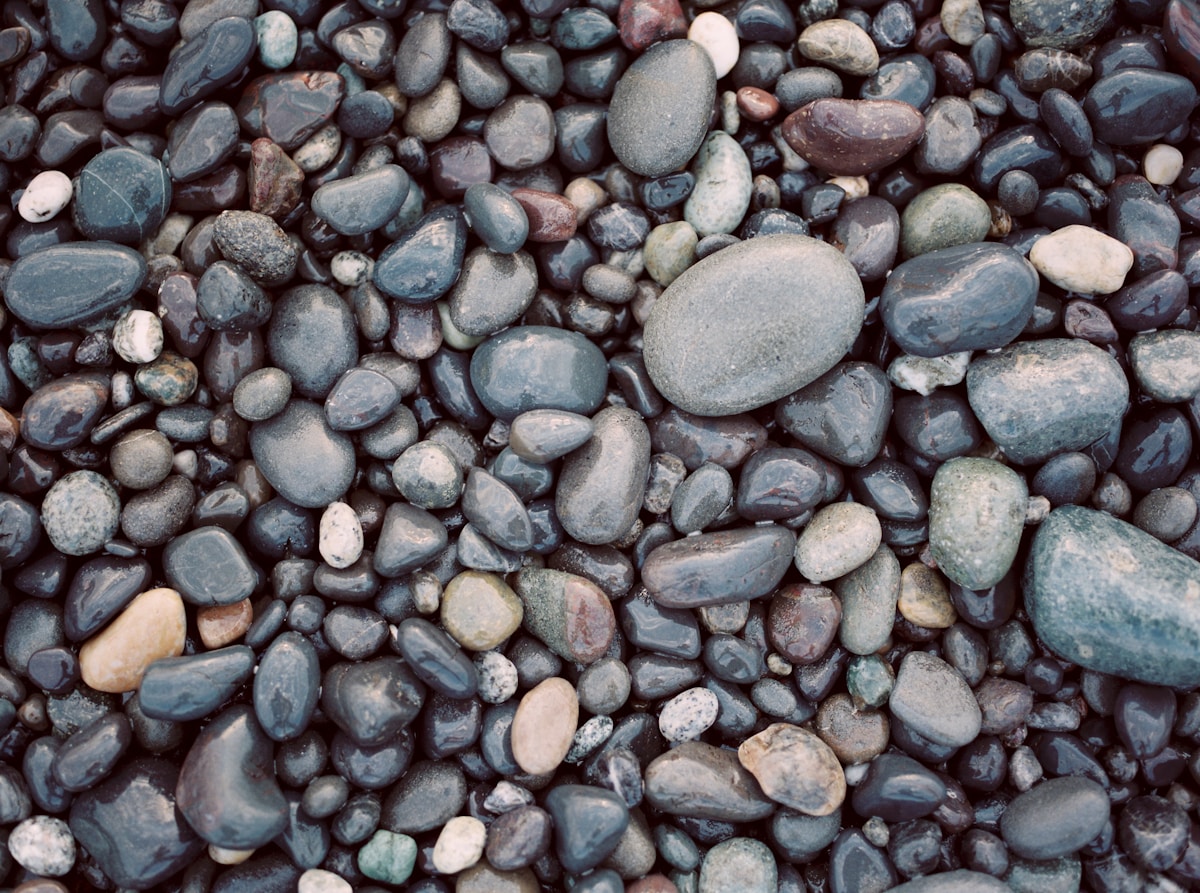
Look in the right places. Sea glass gathers where other small, heavy objects collect. Check along the high-tide line, in rock pools, and at the base of groynes or sea walls. Pebbly beaches hold glass far better than sandy ones because the glass gets trapped between stones.
Train your eye. Sea glass has a distinctive frosted sheen that catches the light differently from wet pebbles. Once you spot your first piece, your brain recalibrates and you start seeing them everywhere. Crouching down and scanning at a low angle helps enormously.
Bring the right gear. A small cloth bag or container works better than pockets, which can tear on sharp edges.
Check the weather forecast. Overcast days with soft light are actually better for spotting sea glass than bright sunshine, which creates glare on wet pebbles and makes everything harder to pick out.
Is Collecting Sea Glass Legal?
Yes. Sea glass is not a protected natural material, and picking it up from UK beaches is perfectly fine. The only exception would be beaches within Sites of Special Scientific Interest, where removing any material may be restricted. Check site designations if you are unsure. Be reasonable about quantities. Taking a handful for a collection is fine, but stripping a beach bare to sell online is both greedy and unsustainable.
Making the Most of Your Finds
Once you get your sea glass home, rinse it in fresh water and let it dry. The frosted appearance fades slightly when dry, which is normal. Some collectors apply a light coat of mineral oil to restore that wet-look sheen for display. Sea glass works brilliantly in jars on windowsills, as jewellery, in mosaics, or simply scattered in a bowl on a table. Every piece has spent decades in the ocean, and there is something satisfying about knowing the journey it took to end up in your hand.