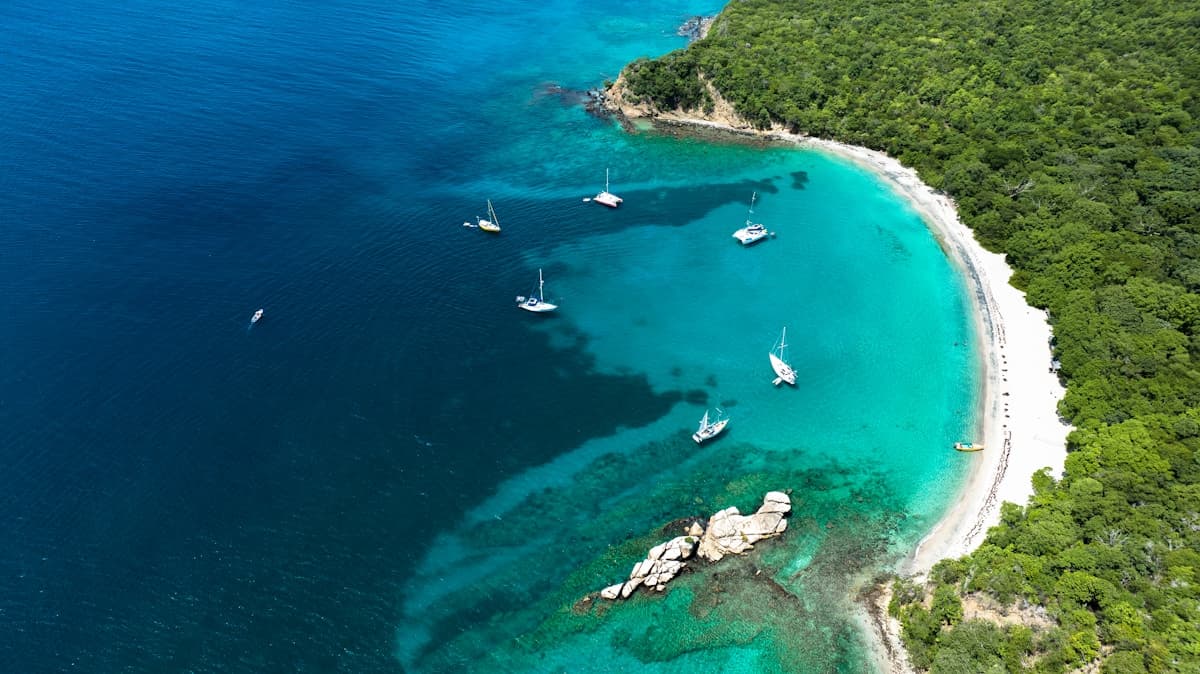
Every secret beach has a shelf life. Someone posts a photo, a travel blog picks it up, and within a couple of seasons the parking lot doubles in size and a smoothie bar appears. But there are still quiet beaches near me and you that manage to stay under the radar, mostly because getting to them takes effort. These are beaches where you earn the view, and that barrier to entry is exactly what keeps them worth visiting.
Secret Beaches in the UK
Barafundle Bay, Pembrokeshire, Wales is the beach that people who live in Wales guard jealously. There is no road access. You park at Stackpole Quay, then walk about half a mile along the cliff path before descending stone steps to a sheltered cove with golden sand and water so clear it looks like it belongs in Greece. No facilities, no cafe, no ice cream van. Bring everything you need and carry your rubbish out. The walk filters out casual visitors, so even in August you can find space. Visit midweek in June or September and you might have the whole bay to yourself. The National Trust manages the car park at Stackpole, with parking around £5.
Kynance Cove, Cornwall appears on postcards, but its awkward access keeps the crowds manageable. The cove sits on the Lizard Peninsula with serpentine rock stacks, sea caves, and turquoise water that looks digitally enhanced but is genuinely that colour. At low tide, the beach opens up into multiple sandy sections between the rocks. At high tide, most of the sand vanishes, so timing your visit matters. The path down from the National Trust car park takes about 15 minutes and the climb back will remind you that you skipped leg day. Aim for early mornings in July, or visit in May when the wildflowers on the cliff path are at their best and the beach is practically empty.
Hidden Coastlines Across Europe
Cala Mariolu, Sardinia, Italy sits on the Gulf of Orosei and is only reachable by boat or a serious hiking trail that drops 500 metres through dense Mediterranean scrub. Most visitors take a boat from Cala Gonone, which runs about €25 to €35 return. The beach is a mix of smooth white pebbles and sand, with water so transparent the boats look like they are floating on air. The boats bring day trippers between 10 AM and 4 PM, so if you hike in and camp nearby (with permission), mornings and evenings are yours alone. June and September hit the sweet spot between warm water and thin crowds.
Praia da Marinha, Algarve, Portugal is carved into ochre limestone cliffs on the southern coast. A steep staircase from the cliff top car park leads down to a compact beach framed by rock arches and sea stacks. It has appeared on plenty of "best beaches in Europe" lists, yet the stairs and limited parking keep numbers in check. The water is excellent for snorkelling, particularly around the rock formations to the east. Go early in the morning during summer, or visit in late September when the water is still warm from months of sun but the school holiday crowds have cleared out. Parking is free but the lot is small.
Zlatni Rat, Bol, Croatia is unusual because its shape shifts. This narrow spit of white pebbles extends into the Adriatic and changes direction depending on the wind and current. You reach it by walking about 20 minutes from Bol town on the island of Brac, or by water taxi. Brac sees a fraction of the visitors that Hvar or Dubrovnik attract. The water is warm enough for comfortable swimming from June through September. For the quietest experience, visit the western tip of the spit where most day trippers do not bother walking.
Secret Beach Spots in Asia
Railay Beach, Krabi, Thailand is technically on the mainland but limestone cliffs cut off all road access, so you arrive by longtail boat from Ao Nang or Krabi Town. The boat ride costs around 100 to 200 Thai baht and takes 15 minutes. Railay West has the best swimming beach with soft sand and calm water backed by towering karst formations. It has become more popular over the years, but walking ten minutes to Phra Nang Cave Beach at the southern end still feels genuinely remote. Rock climbers come for the world-class limestone routes on the cliffs above. The dry season from November through March gives you the best weather, with February being the sweet spot before prices peak.
Secret Beach, El Nido, Philippines lives up to its name. Tucked inside a limestone karst formation in the Bacuit Archipelago, you access it by swimming through a narrow gap in the rock wall. On the other side, a small stretch of white sand faces a hidden lagoon. It is part of the Tour C island-hopping route from El Nido town, which costs around 1,400 Philippine pesos per person including lunch. The entrance gap is tight and can be tricky in rough water, so listen to your boat guide about conditions. Visit during the shoulder months of November or May to dodge peak season prices and crowds while still getting decent weather.
The Americas
Playa Escondida, Marieta Islands, Mexico is a beach inside a collapsed volcanic crater. You reach it by swimming or kayaking through a short tunnel from the open ocean. The Marieta Islands are a protected national park off the coast of Puerto Vallarta, and daily visitor numbers are strictly capped at 116 people. You need a permit, which your tour operator will arrange. Tours run around $80 to $100 USD and include snorkelling in the surrounding waters. The visitor cap means the beach never feels crowded, but it also means you should book well in advance during December through April. The water inside the crater is calm and shallow, perfect for floating around while staring up at the open sky through the crater rim.
Why These Beaches Stay Quiet
The common thread is access. Every beach on this list requires a hike, a boat ride, a swim through a rock gap, or some combination. No tour bus can pull up and unload fifty people with beach chairs. That friction is the filter, and it is what keeps these places special. The beaches that lose their magic are the ones where someone builds a road and a car park.
How to Visit Without Ruining the Place
Finding a secret beach comes with responsibility. Pack out everything you bring in. Skip the Bluetooth speaker. Stay on marked trails where they exist so you are not eroding the cliff paths that make access possible. If a beach has a visitor cap or permit system, respect it rather than trying to work around it. And think twice before geotagging the exact location on social media. The more specific you are, the faster a quiet beach turns into a busy one. Some places are better shared through word of mouth with people who will treat them well.
These beaches reward the effort. No sun loungers for hire, no cocktail carts. Just clean sand, clear water, and the kind of quiet that reminds you how much noise most beach holidays actually involve.